
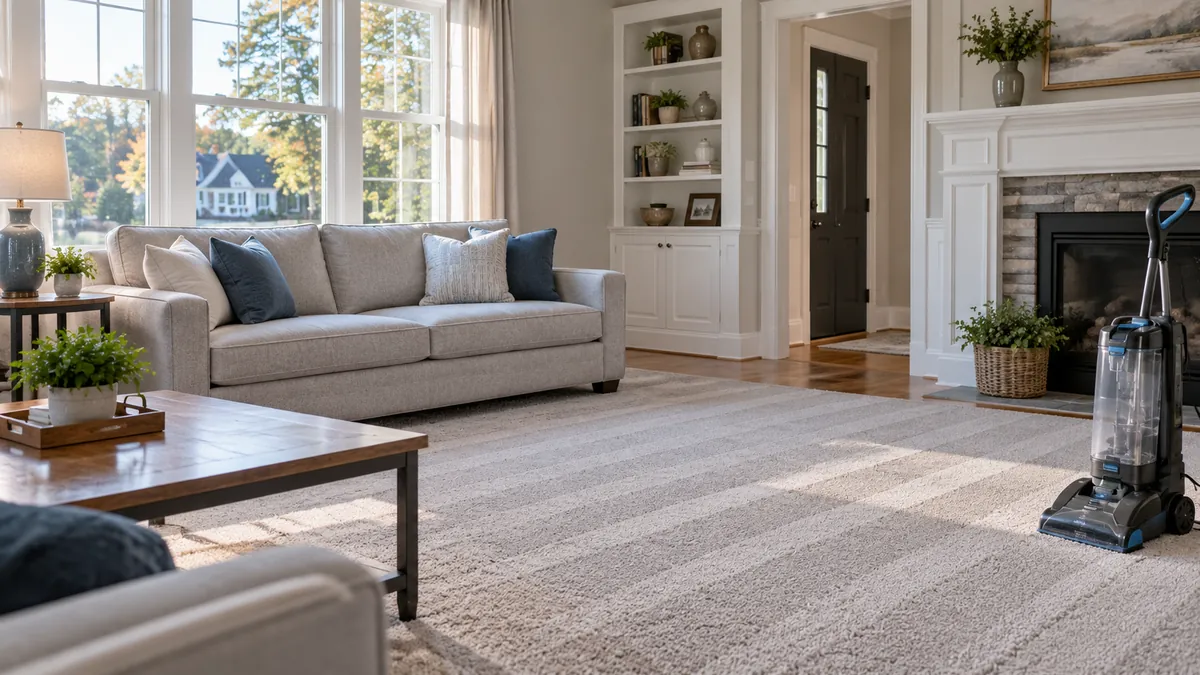
We deep clean carpets and upholstered furniture
Before anything gets wet, we vacuum the pile and check what each fabric can take. Our products are eco-friendly and non-toxic, and the on-site estimate is free.
Our carpet cleaning follows the same steps
Every carpet job starts with a slow, careful vacuum, and we do not rush it. Sand and dry grit sit at the bottom of the pile, and once water hits them they turn to mud that gets pushed deeper. After that we walk the room and find the spots, like a coffee drip by the couch or an old pet accident in the hall. Each one gets its own pretreatment, matched to what caused it, before we clean the rest of the floor.
Then comes the main cleaning pass with eco-friendly, non-toxic products. The solution loosens the oily film that holds dirt to the fibers, and a rinse pass pulls it back out. That rinse decides how the carpet looks a few weeks later. Soap left in the pile stays slightly sticky, and sticky fibers grab dirt from every shoe that crosses them. When a carpet looks clean on cleaning day and gray again soon after, leftover soap is usually the reason.
The last part is getting the water out and the air moving. We pull out as much moisture as the fibers will give up, then brush the pile so it dries standing up. Anything set back on damp carpet goes on protective tabs, so wooden legs cannot stain it and metal feet cannot leave rust. Done right, the room looks even from the doorway, and a spot we treated leaves no ring behind.
- Thorough vacuum before any water touches the carpet
- Each spot pretreated for what caused it
- Eco-friendly, non-toxic cleaning products
- Rinse pass so no soap stays behind
- Fabric tested on a hidden spot first
We check the fabric before cleaning furniture
A sofa is trickier than a carpet, because the fabric decides what is safe to use on it. Most upholstered furniture has a tag under the cushions with a cleaning code on it. That code says whether the fabric can take water or needs a solvent instead. We read the tag first. Then we test the cleaning solution on a hidden spot, like the underside of a cushion. We wait to see how the dye and the fabric react.
Skipping that test is how furniture gets ruined. Cotton and linen can shrink or turn brown when they get too wet. The water wicks residue up from the stuffing and leaves a tan line as it dries. Some dyes bleed, and a red trim can leave pink streaks on a cream cushion. Velvet and microfiber can dry stiff or blotchy if nobody brushes the pile while it is damp. None of that can be undone later, which is why the slow start matters.
On most sofas the dirt is not spread evenly. The arms and the top of the back collect skin oil, and the seat cushions hold crumbs and pet hair deep in the seams. We vacuum the seams first, then pretreat the oily areas before we clean the whole piece. Cleaning only the dirty patches leaves them lighter than the fabric around them, and the sofa ends up blotchy. A sofa cleaned right is one even color from arm to arm, and the fabric feels soft once it dries.
Massachusetts weather changes how we clean carpet
From December through March, every pair of boots that comes into a Canton house brings road salt and sand with it. The sand grinds at the fibers like fine sandpaper. The salt dries into a white crust that pulls moisture out of the air, so the carpet near the door stays slightly damp. The front hall and the path in from the garage take the worst of it. Those areas get a salt pretreatment before the main clean, or the white haze returns once the carpet is dry.
Around Canton, a lot of the housing is colonials and Cape Cods, plus split-levels and raised ranches from the middle of the last century. Many of the older ones have hardwood floors under the wall-to-wall. That changes how much water we can use, because too much can soak through the pad and swell the boards underneath. In a raised ranch or a split-level, the carpeted lower level usually sits on a concrete slab, which stays cool and slows drying. Those rooms need more airflow and less water than an upstairs bedroom.
Summer causes a different problem. July and August air around here is heavy and humid, and damp carpet dries slowly in it. Carpet that stays wet too long starts to smell musty, and in a basement the backing can grow mildew. So in humid months we pull extra water out on the final pass. We also ask you to keep the air conditioning or a dehumidifier running while it dries. If the air outside is muggy, keep the windows shut.
Old stains can return after cleaning
A stain that fades on cleaning day and shows up again a few days later is usually a problem called wicking. The spill soaked past the fibers into the backing or the pad. As the carpet dries, water moves up to the surface and carries the old stain with it. Big spills of coffee or soda do this most. The fix is to flush the spot and pull the water back out several times, then dry it quickly so nothing is left underneath to rise.
Pet urine is the hardest version of this. It spreads wider in the pad than it looks on top, and most of the smell sits in the pad below the fibers. Cleaning the surface can make the room smell better for a while, but a humid Massachusetts day brings the odor right back. We look at pet spots during the free estimate. We will tell you plainly whether cleaning can fix them or the pad underneath is the problem.
Some marks will not come out, and it is better to know that before we start. A gray lane down a hallway is sometimes worn fibers, which cleaning cannot rebuild. Bleach spots and sun fading by a south window are lost color, and no cleaner puts color back. We point those out at the estimate, so the result matches what you expected. Soil and spills are what cleaning removes, and on most carpets that is most of what you see.
Get a free carpet cleaning estimate
Call (781) 414-1969 and we will set up a free on-site estimate with no obligation.
Call now for a free cleaning quote
It depends on how thick the carpet is and what the weather is doing. Thin carpet in a heated house in January dries fastest, and plush carpet in a basement in August takes longest. Running the air conditioning or a dehumidifier shortens the wait.
Most upholstered furniture has a tag with a cleaning code that says whether the fabric can take water. We read it, then test our solution on a hidden spot before we clean anything you can see. If a fabric should not get wet, we will tell you at the free on-site estimate.
Yes. We use eco-friendly, non-toxic cleaning products on carpets and upholstery. It still helps to keep kids and pets off the carpet until it dries, so socks and paws do not track dirt into the damp fibers.
Often, if the urine stayed in the fibers, because flushing the spot and pulling the water back out removes it. If it soaked through to the pad, the smell comes from underneath and surface cleaning will not fix it for good. We check pet spots at the estimate and tell you which case you have.
Yes, along with wall-to-wall carpet and upholstered furniture. Wool and handmade rugs get the same fabric and dye test as a sofa before we clean them, because some dyes run when they get wet.
Yes. We offer flexible scheduling, including evenings and weekends. An evening appointment lets the carpet dry overnight while nobody is walking on it.
Tell us what needs cleaning.
Tell us what you need cleaned and we'll set up a free on-site estimate.